Purbeck’s stone gets plenty of attention. You can see it in the cliffs, the villages and the buildings far beyond Dorset. But north of the ridge, around Wareham and Furzebrook, another material has shaped the landscape and the lives of local families that of ball clay.
It may sound an unlikely subject for a walk, but once you know a little of its story, you begin to notice it everywhere.
It may sound an unlikely subject for a walk, but once you know a little of its story, you begin to notice it everywhere.
From Purbeck to the Potteries
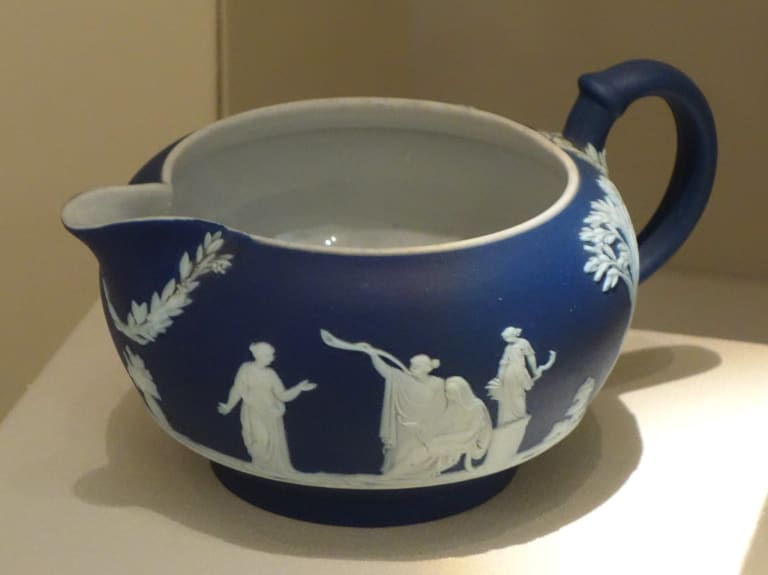
Clay was being dug here and shipped through Poole Harbour by the seventeenth century. It was used to make tobacco pipes before becoming an important ingredient in ceramics. By the eighteenth century, Purbeck’s clay had caught the attention of Josiah Wedgwood and other potters in Staffordshire. Its plasticity helped them shape their wares, while its properties when fired made it valuable for fine pottery.
There is a small distinction worth knowing: the clay mined around Furzebrook and Wareham is "ball clay" rather than china clay. Both are used in ceramics, often together. Ball clay helps give an unfired piece strength and workability; china clay contributes whiteness. So Purbeck clay could help make fine china without itself being called china clay.
The people who got it moving
As demand grew, so did the challenge of transporting heavy clay across the heath and out to the wider world. In the nineteenth century, two businesses came to dominate the local trade: Pike Brothers at Furzebrook and Benjamin Fayle’s works at Norden.
Fayle built a horse-drawn tramway from Norden to Middlebere, where clay could be loaded onto boats on Poole Harbour. It opened in 1806 and is regarded as Dorset’s first railway. Pike Brothers had a narrow-gauge line running from Furzebrook towards Wareham Quay. Later, steam locomotives and the mainline railway offered more ways to move the clay to its customers.
Behind those routes were the men who dug, cut, loaded and carried the clay. Open pits and underground mines provided work for generations of local families. The Purbeck Mining Museum records that, at times, clay work supported half the population of some nearby villages. Underground mining finally ended here in 1999, though open-cast extraction continued.
Pike Brothers and Fayle eventually merged. In 1969, their business was taken over by "ECC Ball Clays", part of English China Clays. For many local people, ECC is the name they associate with the industry. The Furzebrook works and nearby ball-clay operations are now associated with Imerys a firm of French derivation.
A landscape shaped by clay
If you farm in Purbeck, the changing ground is impossible to ignore. Across the heaths, sandy, nutrient-poor soils sit alongside clay layers and wetter hollows. Some ground drains freely; some holds water. That variety made parts of the area difficult to cultivate, but it also helped create the heathland and wet habitats that make this corner of Dorset so distinctive.
Mining changed the surface too. Old pits, spoil heaps and former railway routes still leave their marks. The Blue Pool at Furzebrook began as a clay pit and is now one of the area’s best-known places to visit. Elsewhere, former workings have grown over or become wetland habitat. Modern restoration is planned around the conditions and intended future of each site, which may include heathland and grassland rather than a return to farming.
It is a different way to look at Purbeck. The quiet paths around Norden and Furzebrook pass through what was once a busy working landscape, connected by rail and water to workshops and factories many miles away. Next time you are nearby, the Purbeck Mining Museum’s Clay Trail is a lovely place to start uncovering it.


